Garage Door Noises: What Grinding, Squeaking, Popping and Shaking Mean
In short
What common garage door noises point to (grinding, squeaking, popping, a loud bang, shaking, opener hum), the checks a homeowner can make safely, and the repairs to leave to a pro.
Most garage door noises lead back to one part. Grinding usually means rollers with worn bearings or a track out of line, squeaking means dry metal pivots, popping comes from a straining torsion spring or a flexing steel section, and shaking means loose or worn hardware. One sound deserves urgent attention: a single loud bang from the garage when nobody is touching the door, which is often a torsion spring breaking.
First, find where the sound starts
Stand inside the garage, clear of the door's path, and have someone run the door from the wall button while you watch one zone at a time.
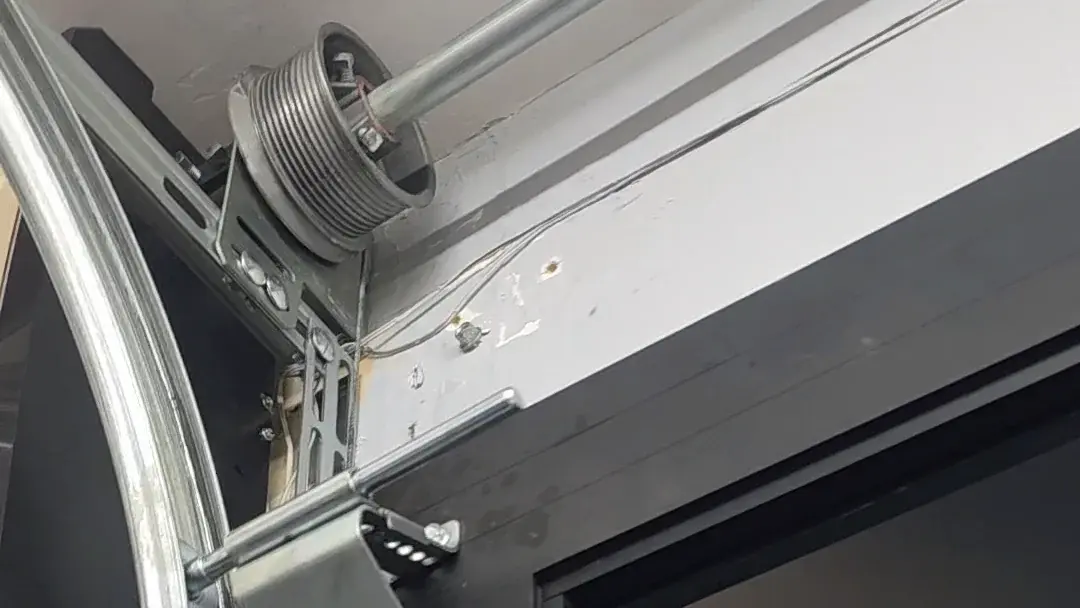
- Above the door: the torsion spring, the shaft it sits on and the bearing plates at each end.
- Along the sides: the rollers, the hinges between sections and the brackets that fix the tracks to the wall.
- On the ceiling: the opener, its rail and the chain, belt or screw that drives the trolley.
- At the floor: the bottom seal and the two bottom corners, where the lift cables attach.
Note whether the sound happens going up, going down or both. A noise that always arrives at the same height usually comes from one hinge, one roller or one spot in the track.
Grinding or scraping
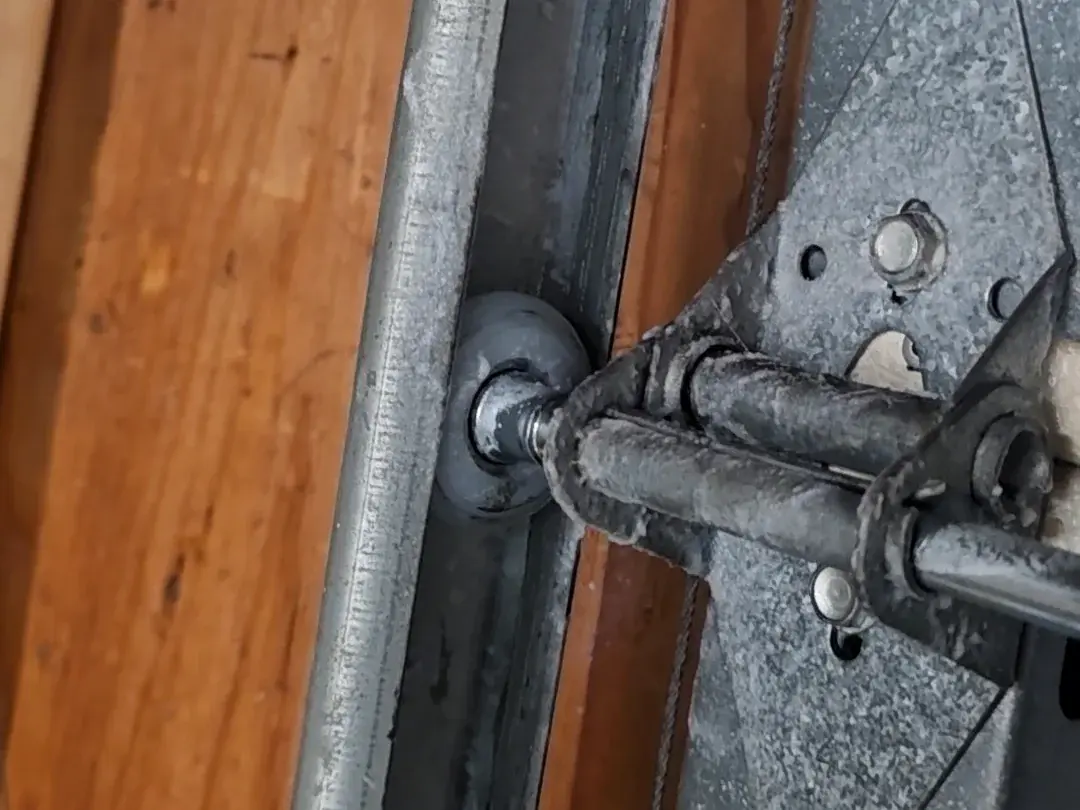
A rumbling grind that follows the door all the way up and down is the textbook sign of rollers whose bearings have given out. Steel rollers with open bearings are the usual source, and in coastal neighborhoods the salt air rusts those bearings sooner than it would a few miles inland. A harsher scrape at one spot is different: it is more often a roller rubbing the wall of a track that was bumped or has a loose bracket, or the edge of the door dragging on the jamb weatherstrip.
What you can check: with the door closed, sight along each track for dents, kinks and loose bracket bolts. Then watch the rollers as the door moves. A healthy wheel turns; a worn one slides or wobbles on its stem.
Squeaking and squealing
Squeaks come from steel pivoting on steel without enough lubricant: hinge knuckles, roller stems in their hinge sleeves, spring coils rubbing each other and the bearings that carry the spring shaft. Inland summer heat bakes old grease dry, and garage dust sticks to whatever film remains.
This is the noise most homeowners can fix on their own. A spray lubricant made for garage doors, usually silicone or white lithium, on the hinges, roller bearings, spring coils and end bearings tends to quiet the door after a few cycles. Keep it off the tracks and off the treads of nylon wheels. The step-by-step guide on how to lubricate a garage door lists each point and the products that do more harm than good.
Popping, cracking and banging
Popping has three common sources, and they call for very different responses.
- A spring under strain. Torsion spring coils can bind and release with a crack as they wind and unwind, most often when the spring is dry or close to the end of its cycle life. Lubricant sometimes stops it; a spring that keeps popping should be inspected before it fails.
- A flexing section. Wide steel sections without a reinforcing strut can buckle slightly and snap back as the opener pulls them around the curve of the track. A dark steel door in full afternoon sun also ticks as the metal expands and cools, which is harmless when the door still runs smoothly.
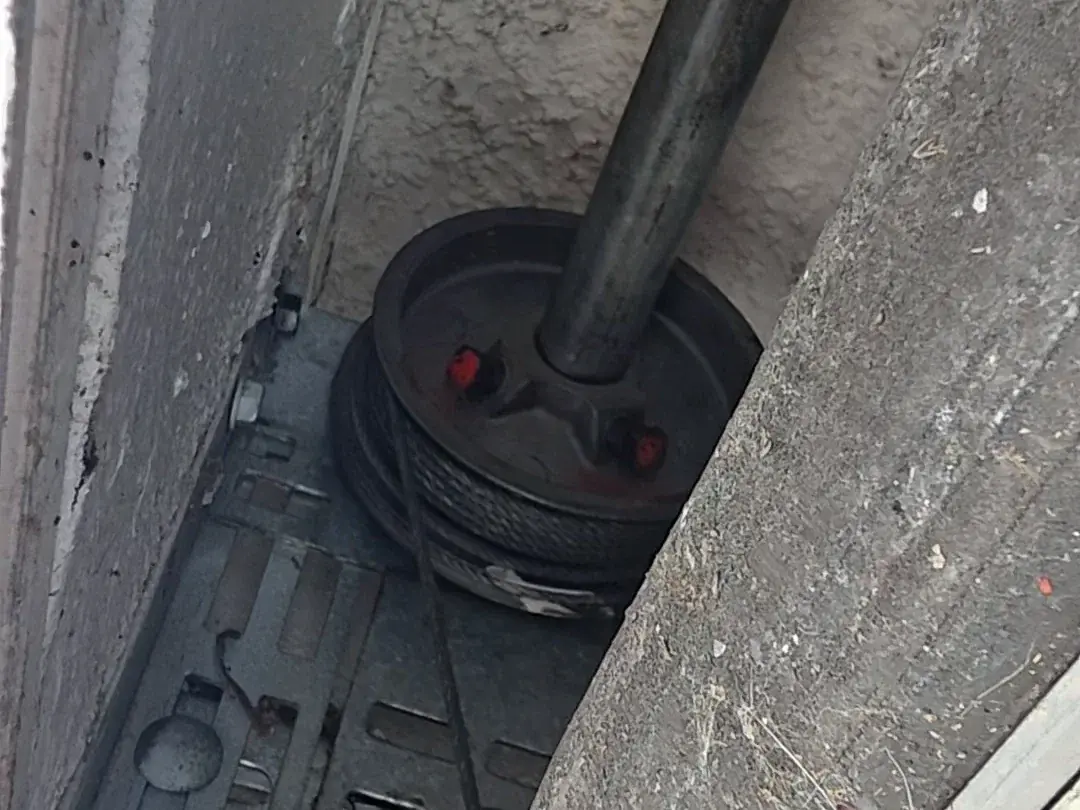
- One loud bang. A single sharp report from the garage, often with nobody near the door, is the classic sound of a torsion spring snapping. From the floor, look at the spring above the door: a gap of a few inches between coils confirms it. Do not run the opener or lift the door by hand after that, because its full weight now hangs on the cables and the opener.
On a door with side-mounted extension springs, a break is more violent: the loose spring can whip across the garage unless a safety cable is threaded through it. If your springs run beside the tracks, check that each one has that cable.
Shaking, rattling and jerking
A door that shudders as it moves has hardware working loose or parts that no longer run true. Typical causes are loose hinge screws and bracket bolts, rollers with flat spots, a bent track and a stretched opener chain slapping its rail. A jerk at the start of travel can also mean the door is out of balance, so the opener is fighting the spring.
Safe checks: tighten loose hinge screws and track bracket bolts with a socket, one fastener at a time, without removing anything. A chain that sags well below the rail can be adjusted by following the opener's manual. Leave the bolts on the bottom corner brackets alone; those brackets anchor the lift cables, which carry the spring's load.
Humming, clicking and other opener sounds
When the motor hums but the door does not move, check three things in order. The door may be locked with its manual slide bolt. The opener may have stripped its drive gear, which is common on older chain-drive units. Or a spring may have broken, leaving the door too heavy for the opener to lift. Clicking without movement usually comes from the opener's logic board or a misaligned safety sensor. Chain drives are also simply louder than belt drives; with a bedroom over the garage, a belt drive is the usual quiet upgrade.
Thumps at the end of travel
A hard thump at the floor or the top usually means the opener's travel limits are set past the door's real stop, which the manual shows how to reset, or the door is heavier than its spring can balance and drops the last foot. That second cause is a spring adjustment.
A safe balance check
If both springs look whole and the cables sit snug on their drums, you can test balance. With the door fully closed, pull the opener's red emergency release to disconnect it, then raise the door by hand until it is halfway open and let go. It should hold its position or drift only slightly. If it falls or climbs on its own, the spring needs adjustment. Reconnect the opener when you finish. Skip this test entirely if a spring is broken or a cable is slack, because the door will be far heavier than you expect and can drop.
What not to do yourself
- Do not wind, unwind or adjust a torsion spring, and do not loosen the set screws on its winding cones. The stored energy can break bones.
- Do not touch the lift cables, the cable drums or the bottom brackets while the springs are under tension.
- Do not pull a roller out of a bottom bracket; it shares that bracket with the cable.
- Do not grease or oil the tracks. Rollers need a clean, dry track to roll on, and grease turns into a gritty paste.
- Do not keep cycling a door that grinds hard, shakes visibly or hangs crooked in the opening. Every run adds load to the opener and the rest of the hardware.
If you find a cable that has slipped off its drum, the post on what to do when a garage door cable comes off the drum covers the safe first steps while you wait for help.
When to call a pro
Call a professional when the noise is a grind, a pop that keeps returning, a loud bang or shaking you can see. Those sounds usually trace to worn rollers, a failing spring or a track out of line. The garage door roller replacement page explains how a worn set is changed and why the hinges and track are checked on the same visit. The line at (619) 666-6054 is open 24 hours, 7 days a week, so call right away if the door is stuck open or a spring has snapped. A door that only squeaks can wait for a booked visit.
More noise questions
Is a noisy garage door dangerous?
A squeak is not, though it signals dry parts. Grinding, repeated popping and shaking are wear that can end with a roller leaving the track or a spring failing.
Why is my garage door louder in summer?
Heat dries out old lubricant and makes steel sections expand, so hinges squeak and panels tick more on hot afternoons. Inland homes notice it most. Fresh lubricant on the moving parts usually brings the noise back down.
Why does my garage door make noise only when closing?
On the way down the door is pushing against the spring rather than being lifted by it, so a dry spring, a tight roller or a misaligned track at one spot can sound off only in that direction. An opener with its down limit set too far will also thump at the end.