Skip to content

Openers

Garage Door Opener Repair and Installation in San Diego

An opener is the motor, drive and control board that moves a balanced door; it does not lift the door's full weight, the springs do. Opener repair finds the failed part, whether a sensor, gear, board, remote or setting, and opener installation replaces a worn unit with a new opener that has the battery backup California requires.

Free estimate. The price is confirmed before work starts.

  • CA Contractor License #1156970 (C-61/D-28)
  • Open 24 hours, 7 days a week
BBB Accredited BusinessGarage Door Repair
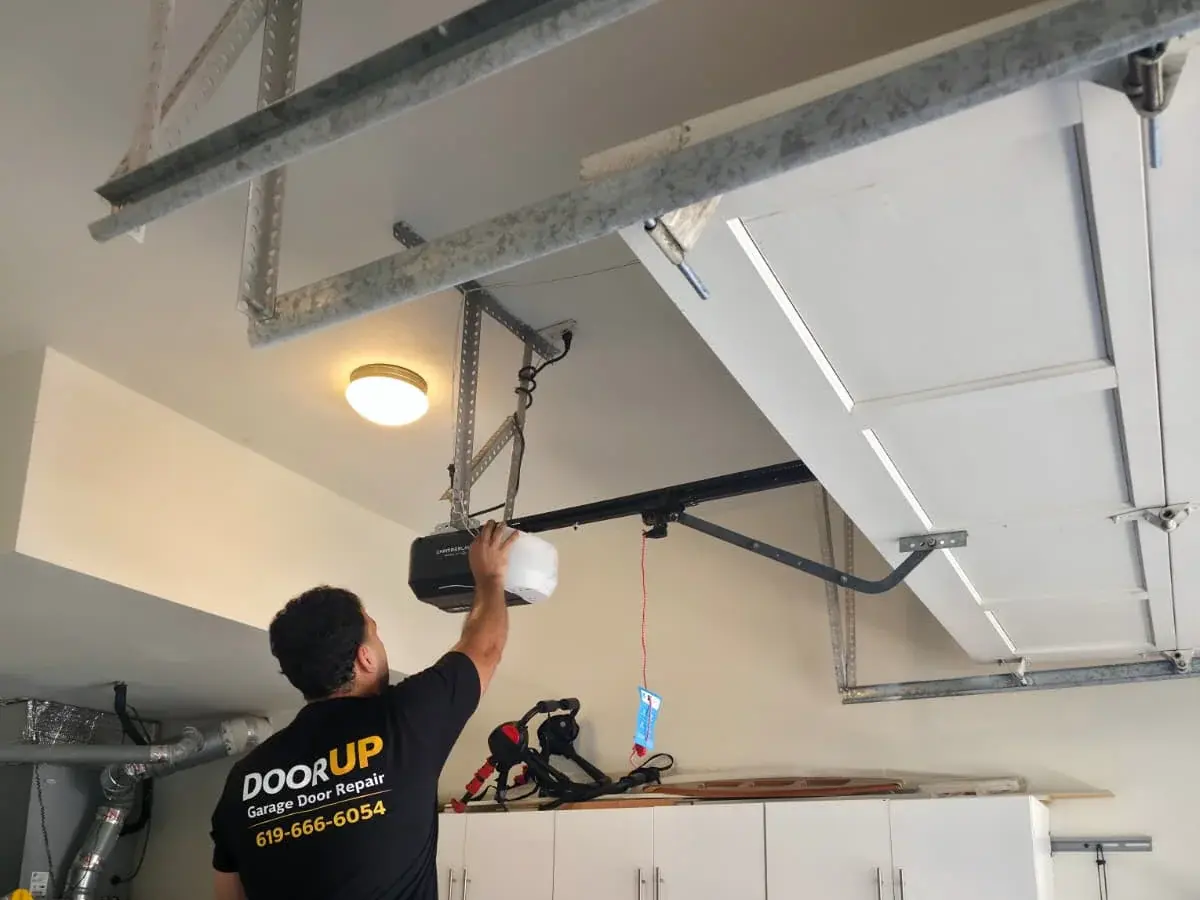
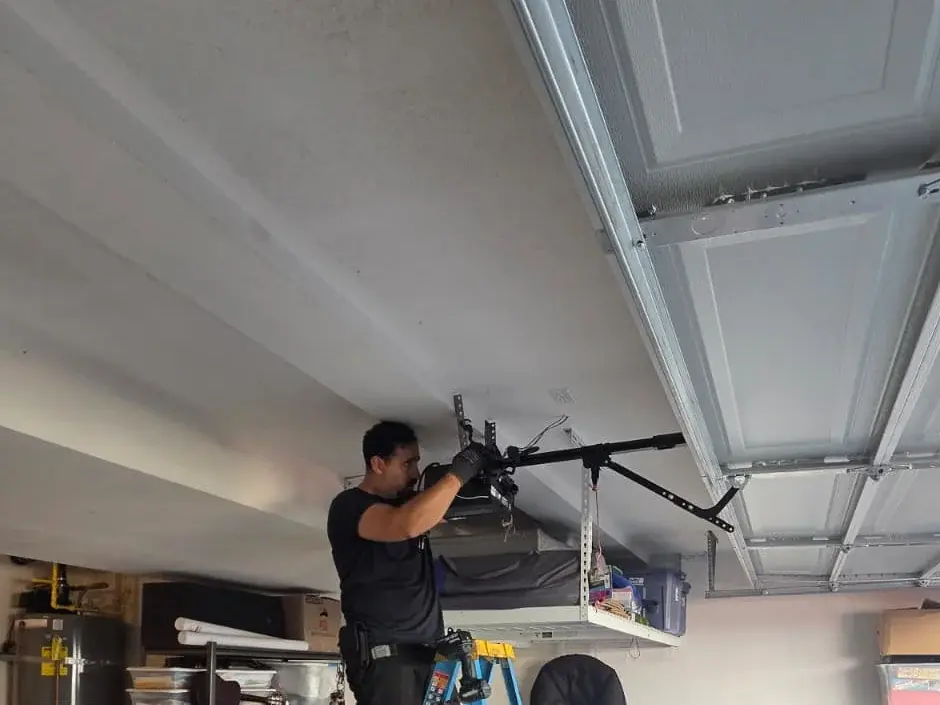
Technician in a Doorup shirt on a ladder, reaching up to a garage door opener motor on the ceiling
CA Contractor License #1156970 (C-61/D-28)Open 24 hours, 7 days a week

Common opener problems

  • The motor hums but the door does not move: a stripped drive gear, a failed capacitor, or a door that is too heavy because a spring broke.
  • The door starts down, then reverses before it reaches the floor: the safety sensors are misaligned, dirty or blinded by low sun, or the close force or travel limit needs adjusting.
  • The light blinks and the door will not close: most openers flash to report a sensor fault.
  • The wall button works but the remote or keypad does not: a weak battery, a lost code, or a lock mode switched on at the wall control.
  • The motor runs and the chain or belt moves, but the door stays put: the trolley is disconnected or the drive is broken.
  • Grinding, rattling or a slack chain that slaps the rail.

Why openers fail

Many opener faults start with the door. When a spring weakens or a roller binds, the opener strains on every cycle until its gear strips or its board burns out. Sensors are knocked out of line by bikes and storage boxes, and morning or evening sun shining straight into a sensor lens can stop a door from closing. Power surges damage control boards, and remotes lose their codes after battery changes or power outages.

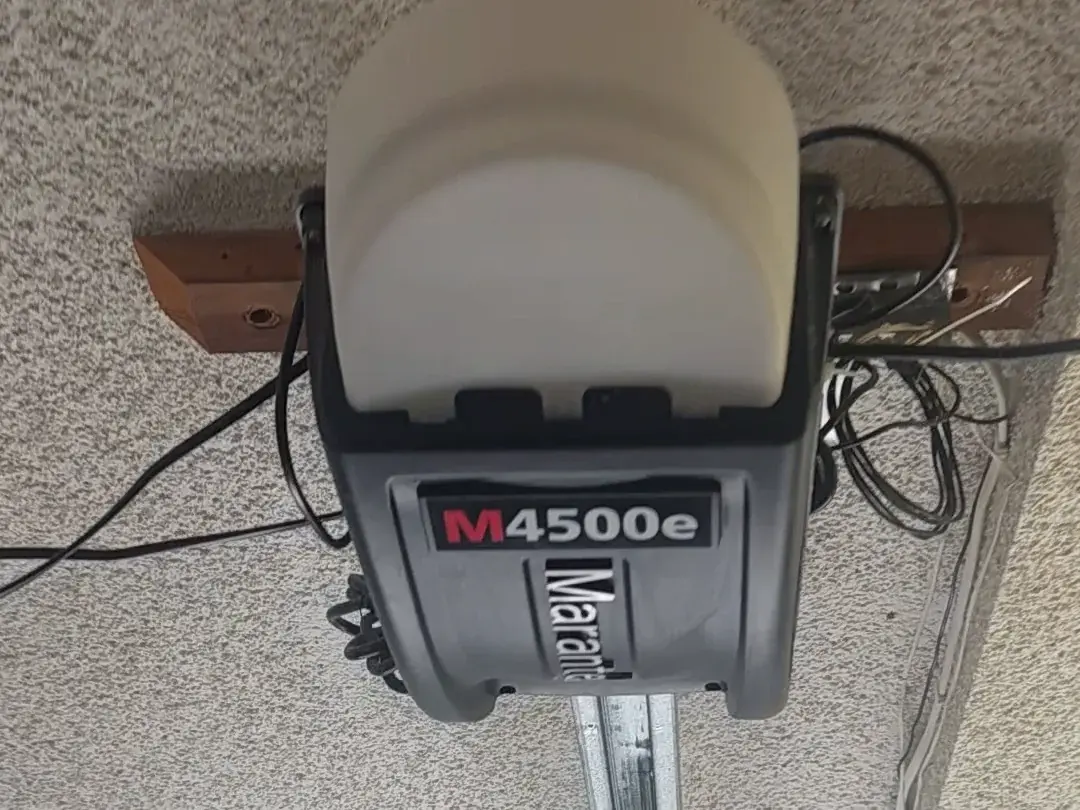
Ceiling-mounted garage door opener on a wood header block, with the rail running toward the door

How Doorup repairs an opener

  1. Release the opener and test the door by hand first. If the door is heavy or out of balance, the springs are repaired before the opener is blamed.
  2. Check the safety sensors: alignment, wiring and the indicator lights on both sides.
  3. Inspect the drive: gear and sprocket, chain or belt tension, the trolley and the rail.
  4. Read the opener's diagnostic flashes where the model has them, and test the control board, wall button and remotes.
  5. Replace the failed part, set the travel limits and close force, and reprogram remotes and keypads.
  6. Finish with the auto-reverse test: the door must reverse when it meets an object on the floor.

Parts and brands

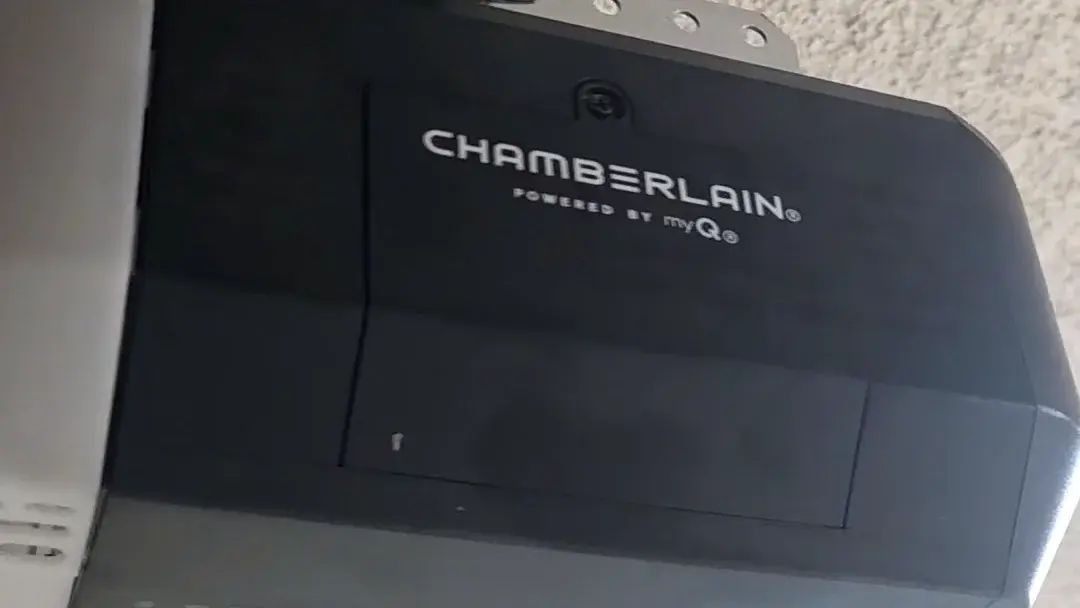
Openers from LiftMaster, Chamberlain, Genie and Craftsman share the same basic parts: a motor, a drive gear or belt pulley, a logic board, a pair of safety sensors and the remotes. Some parts are model-specific, so the model number on the motor unit decides what fits. The brand names here describe the equipment, not a dealer relationship.

Garage door opener installation

Replacing an opener is often better than repairing one that is old, noisy or missing modern safety and battery features. The main choice is the drive. Chain drive openers are durable and common. Belt drive openers run much quieter, which matters with a bedroom over the garage. Wall-mount openers sit beside the door on the end of the torsion shaft, free the ceiling for storage or a high lift, and suit garages with tall ceilings.

Installation covers mounting the header bracket and rail or the wall unit, hanging the motor, connecting it to the door, placing the safety sensors near the floor on each side, wiring the wall control, programming remotes and setting the limits and force. The door has to be balanced before a new opener goes on it, since a new opener on a heavy door fails early.

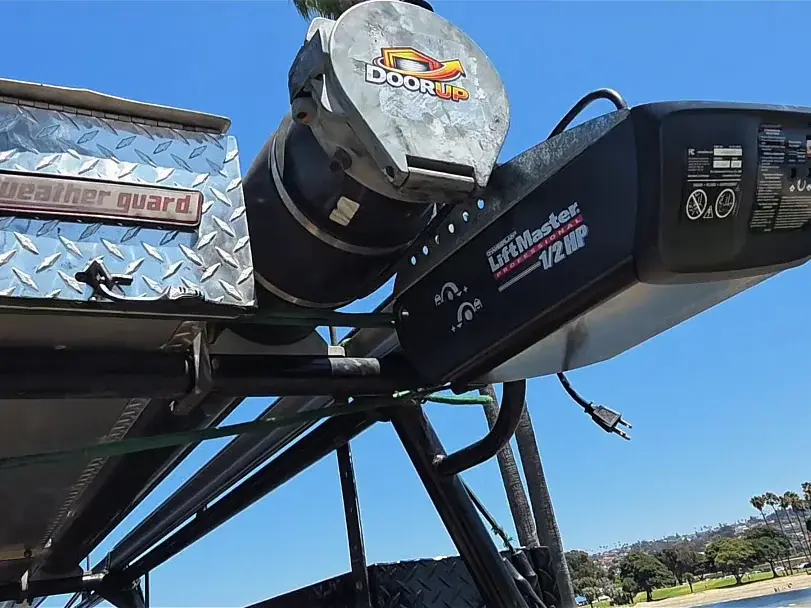
Garage door opener units strapped to the ladder rack of a work truck under a blue sky

Need opener repair?

Free estimate. The price is confirmed before work starts. Open 24 hours, 7 days a week.

SB 969: the California battery backup rule

Senate Bill 969 (Chapter 621, Statutes of 2018) added section 19892 to the California Health and Safety Code. Every residential garage door opener manufactured for sale, sold, offered for sale or installed in California on or after July 1, 2019 must have a battery backup that keeps it working during a power outage. The same section bars connecting a replacement garage door to an existing opener that lacks a battery backup. Section 19891 sets a civil penalty of $1,000 for each opener installed, manufactured, sold or offered for sale in violation.

In practice, a new opener installed in your home must have a battery backup, and replacing the door itself can mean replacing an older opener too. A repair to an existing opener is not named in the rule. Some opener models accept a battery backup accessory; others have no place for one, and that limits the options when a new door goes in.

Smart openers and app control

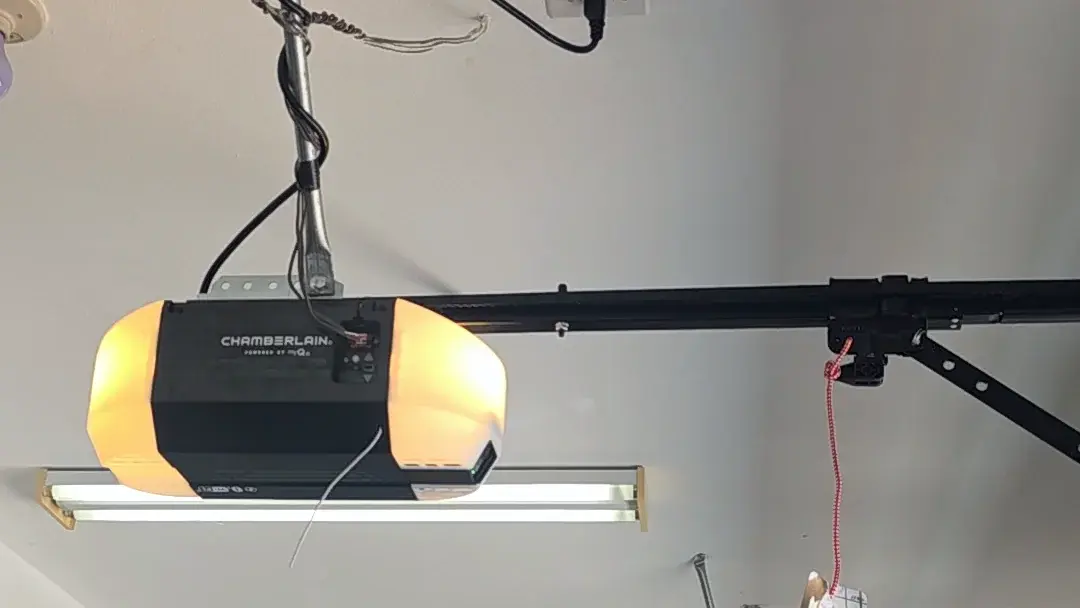
Many current openers connect to Wi-Fi so you can open, close and check the door from a phone. LiftMaster and Chamberlain use the myQ app, Genie uses Aladdin Connect, and some models work with Apple HomeKit. Older openers can often be connected with a retrofit hub mounted on the ceiling, as long as the opener has working safety sensors. A strong Wi-Fi signal in the garage matters more than most people expect.

Opener safety

  • Never disconnect or bypass the safety sensors to make a door close. They are what stops the door on a child or a pet.
  • Test the auto-reverse as the opener manual directs: place a piece of wood flat on the floor in the door's path and close the door. It should reverse on contact.
  • Do not pull the emergency release while the door is open if a spring may be broken; the door can fall.
  • Keep remotes away from children and the wall button above their reach.

When to call

Call when the door will not close, reverses for no visible reason, or the opener hums and strains. A door that will not close leaves the house open, so Doorup takes those calls at any hour on (619) 666-6054. Opener upgrades and smart openers can be booked ahead. Openers and doors wear together, and the tune-up and maintenance visit checks both.

Photos of the work

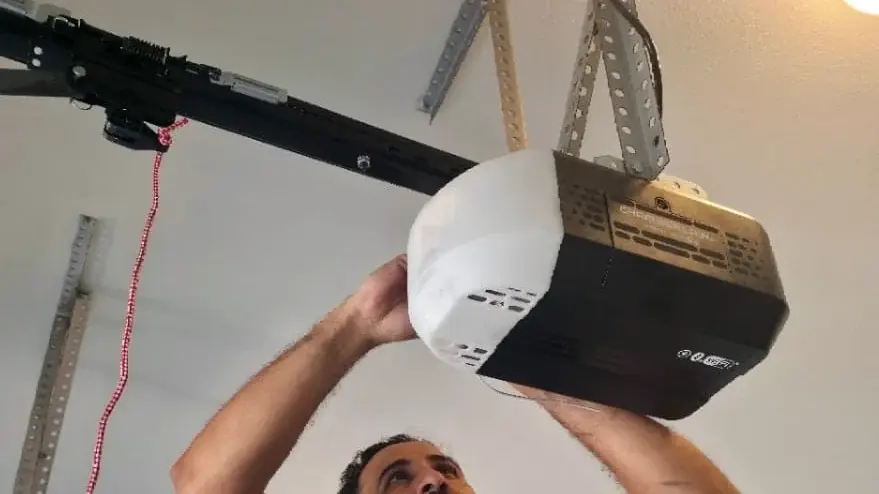
  • Technician on a stepladder working on a garage door opener rail near the ceiling, with the open door overhead
  • Ceiling-mounted garage door opener on a wood header block, with the rail running toward the door
  • Garage door opener units strapped to the ladder rack of a work truck under a blue sky

Blog

Read the guides

Opener questions

What size garage door opener do I need?

The opener has to match the door's weight and size, and the door has to be balanced by its springs. A heavy wood or insulated double door calls for a stronger unit than a light single steel door, and the model's rating for door size is the guide.

Can you put an opener on an old garage door?

Usually, yes, if the door is balanced and its sections are sound. An old door that is heavy or binds should be repaired first, and a door with no reinforcement at the top section may need a strut where the opener arm attaches.

Should I repair or replace my garage door opener?

Repair makes sense for a sensor, remote, gear or limit problem on a newer opener. Replacement makes sense for an old opener with a failed board, no battery backup, or parts that are no longer made.

Can I add a battery backup to my existing opener?

Some models accept a battery backup unit that plugs into the opener; many older models do not. The model number on the motor unit tells which.

Why does my garage door open but not close?

Most often the safety sensors are out of line, dirty or blinded by sunlight. Check that both sensor lights are on and steady, clean the lenses, and remove anything in the beam.

Book opener repair in San Diego County

Free estimate. The price is confirmed before work starts. Open 24 hours, 7 days a week.

Menu

Call (619) 666-6054info@doorupsd.com

Services

Call (619) 666-6054

Service areas

Call (619) 666-6054All 31 areas