Garage Door Opener Battery Backup Law in California: What SB 969 Requires
For: Opener repair and installation
In short
What California's garage door opener battery backup law (SB 969, Health and Safety Code 19892) requires, who it applies to, and what it means when you replace an opener or a door.
California's garage door opener battery backup law, Senate Bill 969, says that from July 1, 2019, no residential garage door opener can be made for sale, sold, offered or installed in California without a battery backup function that keeps it working when the power goes out. The same law bars hanging a replacement garage door on an existing opener that has no battery backup. It does not, by its text, order you to replace a working opener that was already on your ceiling before that date.
What SB 969 says
SB 969 became Chapter 621 of the Statutes of 2018. It changed two sections of the California Health and Safety Code:
- Section 19892, added by the bill, covers residential openers from July 1, 2019: no manufacture for sale, sale, offer for sale or installation of one without a battery backup function designed to run during an electrical outage.
- Section 19892 also says a replacement residential garage door may not be connected to an existing opener that lacks that battery backup function.
- Section 19891, as amended by the same bill, puts a $1,000 civil penalty on every opener that is installed, manufactured, sold or offered for sale against the rule.
You can read the bill as chaptered on the state's official site, California Legislative Information. This post is a plain-language summary for homeowners, not legal advice.
Why a battery backup matters
Most attached garages have one big door and no other way to get a car out. When the power fails, an opener without a battery is dead weight, and the only way out is the emergency release and a door lifted by hand. That is a hard ask for someone elderly or injured, or anyone trying to leave quickly during a fire or a storm. A backup battery lets the opener keep running for a limited number of cycles so the car can get out and the door can close behind it.
In San Diego County, Santa Ana wind events raise wildfire risk in inland and East County communities, and outages can come with them. By a Census-based measure, El Cajon and Santee homes all sit at least 10 miles inland, and those garages also run hot in summer, which matters for battery life later in this post.
Who the law applies to
The duties in section 19892 attach to the opener and the door, not to the house. Read plainly, they reach anyone who makes openers for sale in California, sells or offers them here, or installs them. The text does not carve out a homeowner who installs an opener alone, so a self-installed opener should meet the same rule. Contractors who replace doors are covered by the second part: before connecting a new door to the opener already in the garage, the installer has to know whether that opener has a battery backup.
The section is written for residential garage door openers. Commercial door operators are outside the scope of this post.
Replacing an opener
Any opener installed in a California home now needs the backup function. Many models sold here come with a battery built in or fitted in a separate unit, and some are sold as battery-ready, meaning the battery is an add-on. When you shop, ask whether the battery is in the box. An opener that only accepts an add-on battery should go in with that battery fitted, so the opener on your ceiling actually has the function the law describes.
Many current openers with a battery also connect to a phone app. If you want app control as well, our guide to smart garage door openers compares myQ, Aladdin Connect and HomeKit.
Replacing the garage door
This is the part of the law homeowners most often miss. If you buy a new door and your opener predates the rule, the new door may not be connected to that opener unless the opener has a battery backup. There are two ways through it:
- Add a battery backup unit to the existing opener, if the manufacturer makes one for that model. Many older openers have no provision for a battery at all.
- Replace the opener along with the door. When the existing opener is old or worn, this is often the cleaner choice anyway, since a new door deserves an opener that will last as long.
Plan for this before the door is ordered, not on installation day. Our guide to garage door styles for San Diego homes covers the choices on the door side.
How to tell if your opener has a battery backup
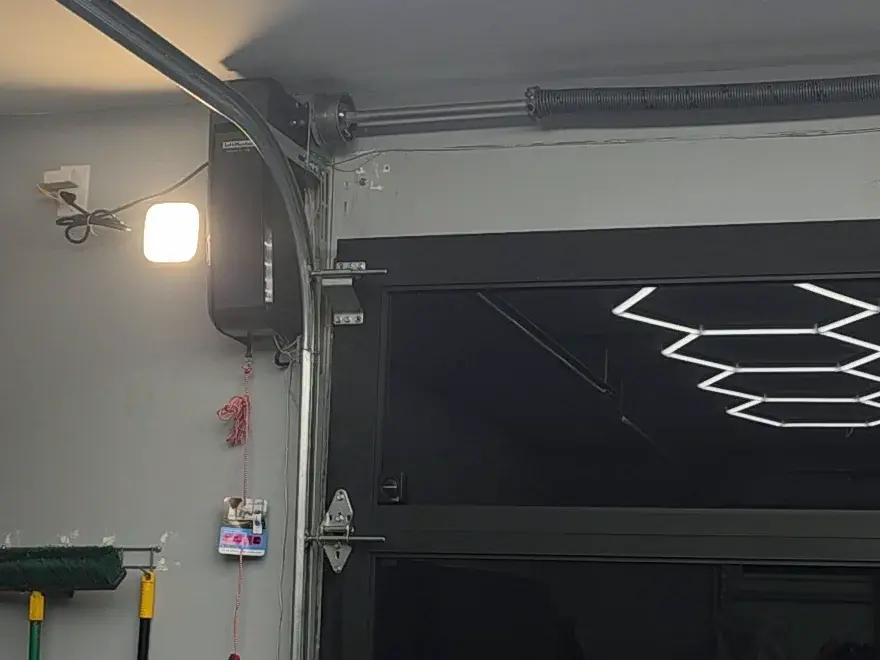
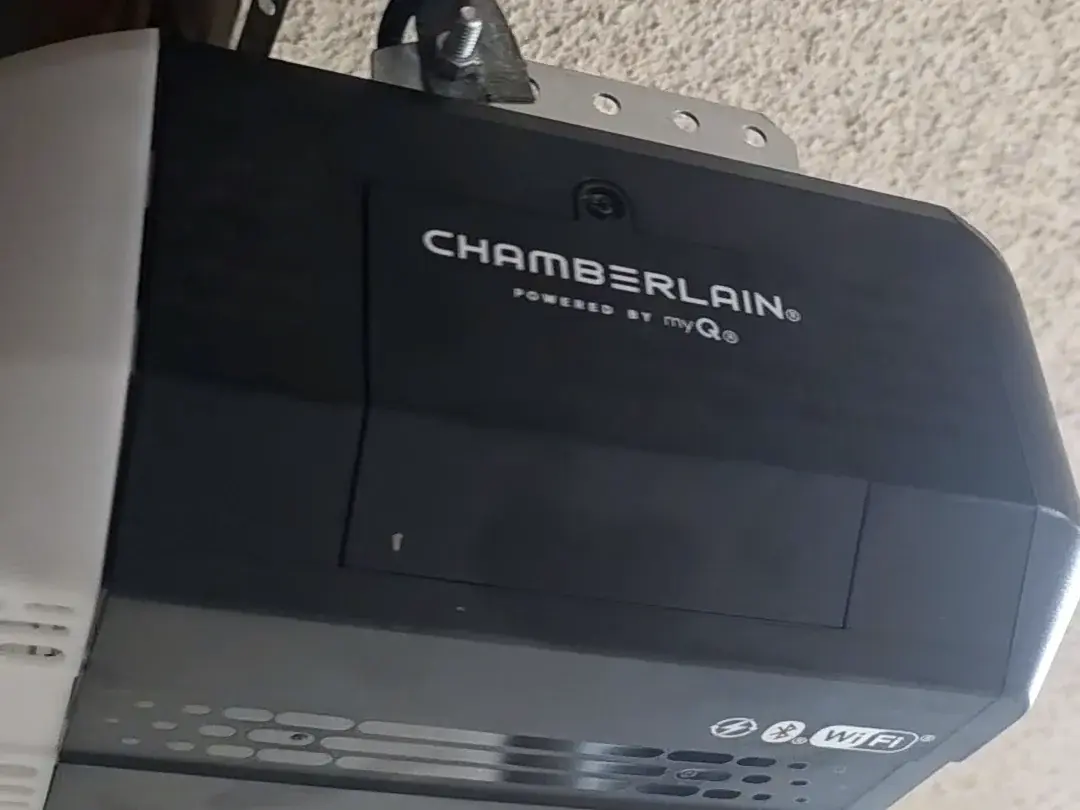
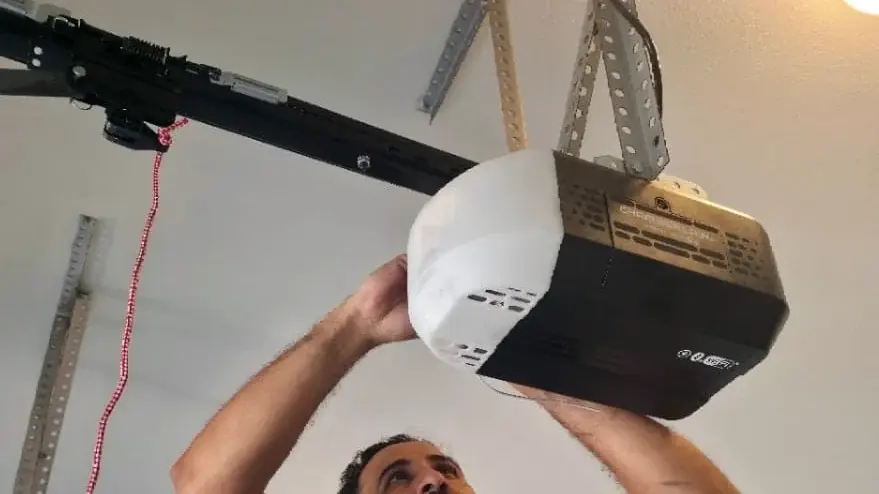
- Look at the motor unit for a battery compartment, a battery cover or a separate battery box mounted nearby.
- Read the label on the motor unit. The model number, looked up in the manual, tells you whether a battery is built in, optional or not supported.
- Think about the install date. An opener put in before July 1, 2019 may well have no backup.
- Run a quick test: with the door closed and the area clear, unplug the opener and press the wall button. If the door runs, a battery is doing the work. Plug the opener back in when you are done.
Living with a battery backup opener
A backup battery is a wear part. It loses capacity with age, and heat speeds that up, so a garage in an inland neighborhood that cooks through the summer will see shorter battery life than a mild coastal one. Many openers beep or flash a light when running on battery or when the battery is getting weak. Replace it with the battery type your manual names, and check it once a year by running the unplugged test above.
On battery power, many openers run slower, switch off the work light, and manage only a limited number of cycles, so use them for getting the car out and closing up, not for routine trips. The emergency release still matters. Learn where the red cord is and how to lift the door by hand with the door fully closed, in case both power and battery fail. A door that feels very heavy when lifted by hand has a spring problem, and springs and cables hold enough tension to cause serious injury, so leave those to a technician.
When to call a pro
Call when you are replacing a door and are not sure the opener can stay, when an opener's backup battery keeps beeping after a new battery goes in, or when you want an older opener replaced with one that has a backup built in. Garage door opener repair and installation covers both the repair and the replacement side. Doorup holds CA Contractor License #1156970 (C-61/D-28); reach the line at (619) 666-6054.
SB 969 questions
Do I have to replace my old opener because of SB 969?
Not on its own. The law governs openers made for sale, sold, offered or installed from July 1, 2019, and new doors connected to existing openers. A working opener installed before that date can stay until you replace it or replace the door it runs.
Does the law cover repairs to an existing opener?
The text names manufacture for sale, sale, offer for sale, installation and connecting a replacement door. A repair to an opener already in place is not one of those. If a repair turns into a new opener, the new one needs the backup.
Who pays the $1,000 penalty?
Section 19891 sets the penalty per opener installed, manufactured, sold or offered for sale in violation, so it follows whoever did those things. How it is enforced in a given case is a question for a lawyer, not a door company.
How long does an opener run on battery power?
It depends on the model, the battery's age and the door. Openers are built for a limited number of cycles on battery, enough to get out and close up during an outage. Your manual lists the figure for your model.