Garage Door Won't Close? How to Find the Cause and What to Check First
For: Opener repair and installation
In short
Why a garage door won't close and how to narrow it down: safety sensor faults, sun glare on the receiver, travel limit and force settings, lock mode, and mechanical problems that need a technician.
When a garage door won't close, the safety sensors near the floor are the first suspect: something is in the beam, a lens is dirty, a bracket got bumped, or low sun is shining straight into the receiver. If both sensor lights look normal, the next suspects are the opener's down limit and close force settings, a lock switch on the wall control, and finally the door itself. Watching exactly what the door does when you press the button narrows it down quickly.
Start with what the door is doing
- Nothing moves and the opener light blinks: the opener is reporting a fault, most often a blocked or misaligned sensor. Many models flash a set pattern that the manual decodes.
- The door travels down a short way, then goes back up: the sensor beam was broken during the close, or the opener felt resistance and reversed.
- The door reaches the floor, then rises again: the down limit is set past the floor, or something at the threshold (a raised slab edge, debris, a stiff bottom seal) feels like an obstacle.
- It closes only while you hold the wall button down: a strong sign of a sensor problem, because many openers allow a held-button close when the beam is not reading.
- The wall button closes it but the remote does nothing: look at lock mode and the remote rather than the sensors.
- The door stops partway and hangs lower on one side, or you heard a loud bang earlier: stop using the opener. That points to a spring or cable.
The safety sensors: what to check yourself
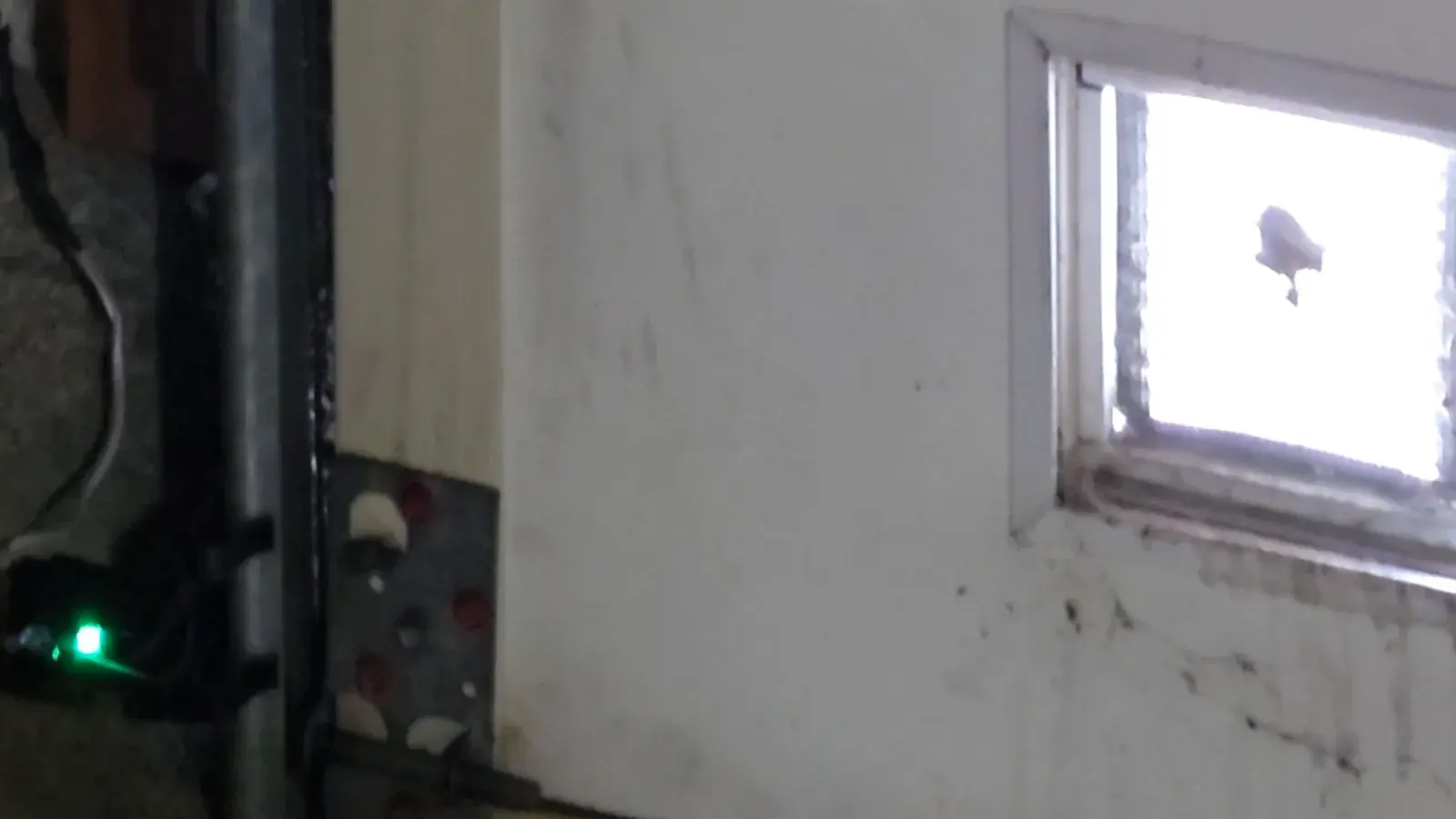
The sensors are a pair of small boxes mounted on each side of the door opening, no more than 6 inches above the floor. One sends an invisible infrared beam and the other receives it. Each has a small indicator light. On most brands the sending unit glows steadily, and the receiving unit stays lit only while it sees the beam; if that light is off or flickering, the opener will refuse to close. Colors and patterns vary by brand, so the manual is the reference.
- Clear the path. Trash bins, bikes, boxes, a garden hose or tall weeds by the door frame can all break the beam.
- Wipe both lenses with a soft dry cloth. Dust, cobwebs, a spider nest or water spots from a sprinkler are enough to confuse the receiver.
- Sight along the two units. They should face each other squarely at the same height. Loosen the wing nut or bracket screw, pivot the receiver until its light holds steady, then tighten it again.
- Check the brackets. A car bumper or a storage shelf can bend a thin metal bracket so the sensor droops toward the floor.
- Trace the thin wires back toward the opener. Look for a staple driven through the wire, a pinched spot behind a shelf, chewed insulation, or a loose wire at the terminal screws.
After any change, close the door with the button and watch it reach the floor. Then run the reverse test described in our garage door safety guide before you trust it again.
Sun glare: when the door fails at the same time every day
A door that closes fine at noon but balks every afternoon is a classic glare case. When the sun sits low, its light can shine straight down the driveway into the receiving lens and drown out the infrared beam, so the opener reads the beam as blocked. San Diego's clear skies make this common, especially on garages that face west in the late afternoon or east in the early morning, and it often gets worse in winter when the sun stays lower in the sky.
The usual fixes are simple. Swap the two units so the receiver sits on the side that stays in shade, if your manual allows it. Fit a sun shield or a short hood over the receiving lens; several opener makers sell them, and a small tube that points the lens away from the glare works on the same principle. Until it is fixed, a door that closes on the second or third try in the evening is telling you the same thing.
Down limit and close force settings
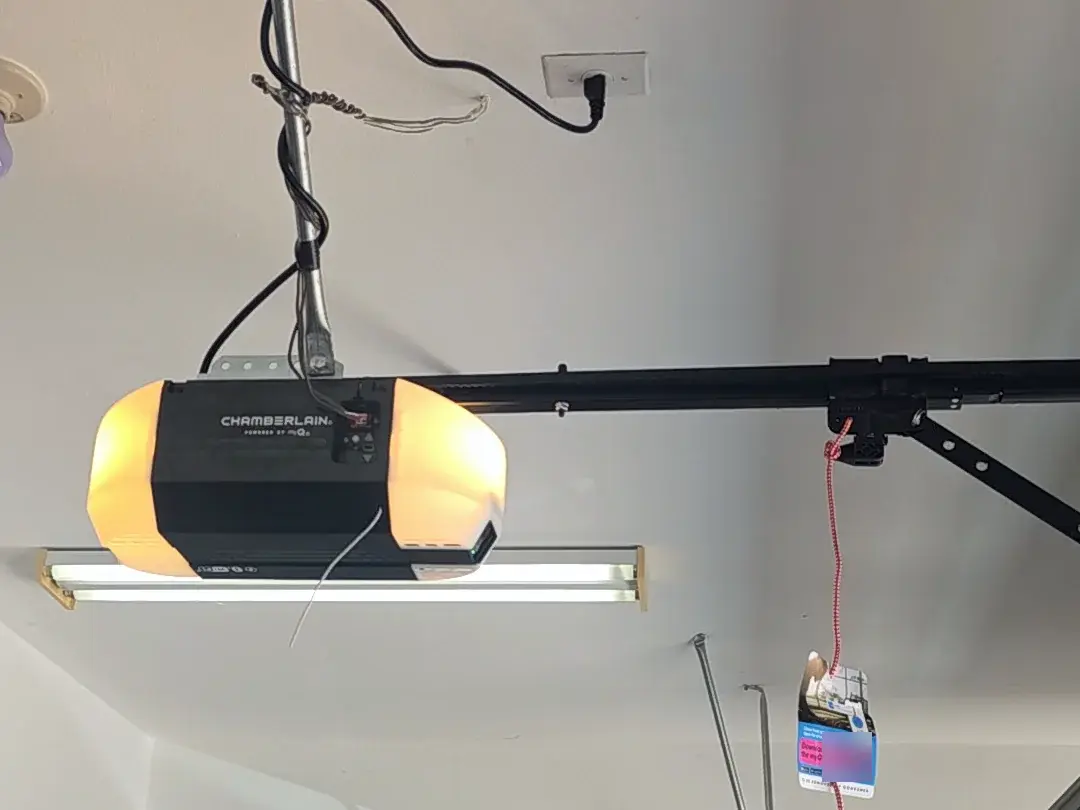
The down limit tells the opener where the floor is. The close force setting tells it how much resistance to accept before it reverses. Both can drift after a power surge, a new opener, a replaced bottom seal or a new floor coating. Newer openers set limits with buttons on the motor head; older ones use adjustment screws. Follow your model's manual and make small changes.
Never turn the force up to make a sticking door close. Close force is a safety setting: it is what lets the door reverse when it meets a person, a pet or a car. A door that needs more force has a mechanical problem, such as a binding roller, a bent track or a weak spring, and more force only hides it until something breaks.
Lock mode, remotes and the wall control
Many wall controls have a lock or vacation switch that blocks remotes and keypads while leaving the wall button working. It is easy to press by accident. If the door closes from the wall but not from the car, check that switch, then the remote battery. Our guide to a remote or keypad that stops working walks through reprogramming and the other radio causes.
When the door itself is the problem
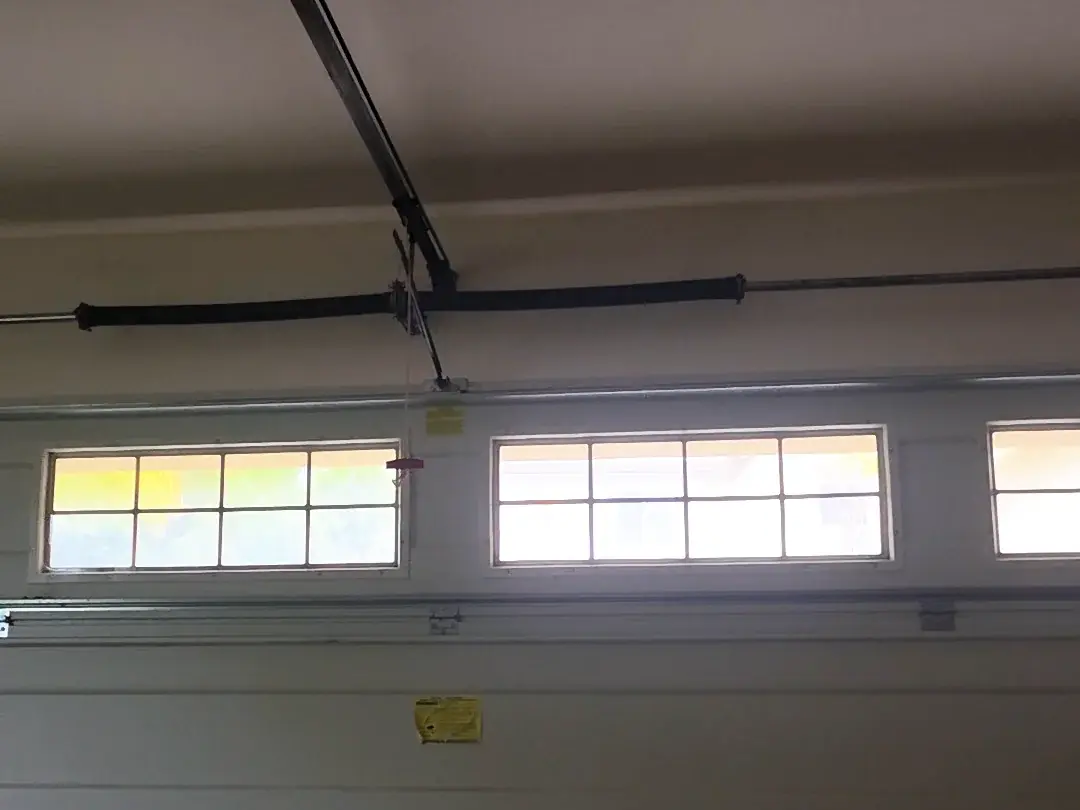
If the sensors read clean and the settings are right, look at the door. A roller that has jumped out of the track, a bent track section, a cracked hinge or a section rubbing the frame will make the opener feel resistance and reverse. A broken torsion spring makes the door so heavy that many openers lift it a few inches and give up. A lift cable that has slipped off its drum leaves one side lower than the other. Near the coast, salt air rusts rollers, hinges and sensor terminals faster than inland, and that corrosion can cause both binding and intermittent sensor faults. In hot inland garages, a vinyl bottom seal can stiffen or warp and catch on the floor.
Closing the garage safely tonight
- If your opener allows a held-button close, stand at the wall control, keep children, pets and cars clear, and hold the button until the door is fully down. Let go to stop it at any sign of trouble.
- Pull the emergency release to close the door by hand only when you are sure the springs and cables are intact. A door with a broken spring can drop hard the moment it is released.
- If the door has a manual slide lock and you use it, unplug the opener first, so nobody can run the motor against a locked door.
- If the door hangs crooked, a cable is loose, or a spring is visibly broken, leave it where it is and call for help.
What to leave to a technician
Sensor cleaning and alignment, clearing the beam and checking lock mode are fair homeowner jobs. Torsion springs, lift cables and the bottom brackets the cables attach to are not. They hold the full weight of the door under high tension, and a slip with the wrong tool can cause serious injury. The same goes for replacing bent track sections, opener circuit boards or sensor wiring inside a finished wall.
When to call a pro
Call when the sensor lights will not hold steady after cleaning and alignment, when the door reverses with nothing in its path, when the opener hums or strains, or when the door hangs crooked or feels heavy. A door that will not close leaves the house open, so it is worth fixing before night. Our garage door opener repair visit covers sensors, wiring, limits, force and the drive. If sensors and settings keep drifting out, a tune-up and maintenance visit checks the door and opener together. Call Doorup at (619) 666-6054.
More questions about a door that won't close
Can I disconnect or bypass the safety sensors?
No. Federal rules for residential openers have required this entrapment protection from the early 1990s on, and the sensors are what stop a closing door on a child or a pet. Fix the fault instead of removing the protection.
Why does my garage door close on the second or third try?
An intermittent sensor signal is the usual reason: glare at certain hours, a loose bracket that shifts when the door vibrates, or a wire with a broken strand inside the insulation.
Can rain or a cobweb really stop a garage door?
Yes. Water drops, a web strand or a leaf across the lens can scatter the beam enough for the receiver to lose it. Clean and dry both lenses and trim plants near the sensors.